The Positive Gene Podcast
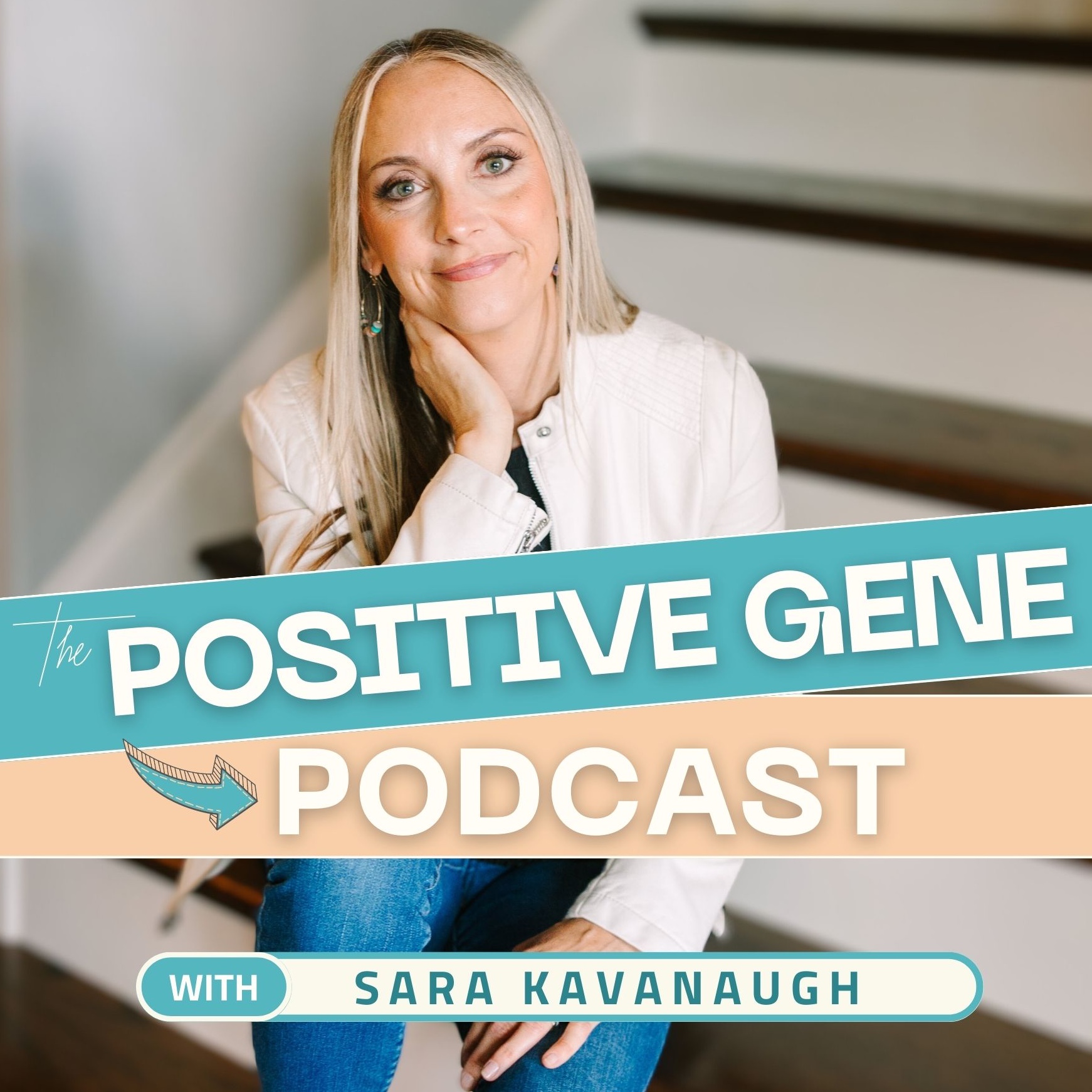
Welcome to The Positive Gene Podcast, where we empower those navigating hereditary cancer risks with hope and optimism. Hosted by Sara Kavanaugh, a hereditary cancer previvor living with Lynch Syndrome (MSH6) and CHEK2 genetic mutations, this show offers a unique perspective on proactive well-being. Drawing on her own experiences and work as an advocate for FORCE, Sara bridges the gap between scientific knowledge and the realities of life as a previvor.
Through engaging discussions with experts, advocates, and fellow previvors and survivors, Sara simplifies the complexities of hereditary risk and provides insights that empower listeners to face challenges with confidence. With a background as a communications expert and storyteller, she creates a space where education meets inspiration, and science meets everyday life.
Whether you’re managing genetic risk, supporting a loved one, or simply curious about how genetics shape our health, this is your space to discover the power of awareness and prevention.
Visit www.positivegenepodcast.com to read the podcast blog, explore resources, or book Sara for your next speaking engagement!
Listen on:






Episodes
Episodes


Sunday Mar 22, 2026
Sunday Mar 22, 2026
Lynch Syndrome Series - This episode is part of a five-part series on living with Lynch syndrome, released in recognition of Lynch Syndrome Awareness Day on March 22.
Episode Overview
In this episode, Sara Kavanaugh speaks with Jennifer Mercer, founder of Lynch Syndrome Awareness and Education, a nonprofit dedicated to increasing awareness and helping families better understand hereditary cancer risk.
Key Takeaways
Family history matters more than most people realize.Even partial information can help guide testing and screening decisions.
You have to start the conversation.Talking about cancer risk may feel uncomfortable, but it can save lives.
Genetic testing provides clarity and direction.As Jennifer describes, it can serve as both a “flashlight and a map.”
Lynch syndrome is not rare.Many individuals and families may be affected without realizing it.
Community and connection reduce isolation.Advocacy organizations play a critical role in helping people feel supported.
Jennifer’s advocacy began with her own family’s experience. After reconnecting with her biological father, she witnessed him endure multiple primary cancers over decades before genetic testing finally revealed Lynch syndrome.
Following his diagnosis and passing, Jennifer made the decision to pursue testing herself and tested positive for an MSH2 mutation. What followed was not only a personal turning point, but the beginning of a broader mission to help other families avoid the same uncertainty.
This conversation focuses on:
how awareness can change outcomes across generations
why family communication is critical in hereditary cancer
and how community and accessible information can support individuals navigating Lynch syndrome
Resources & Links
Lynch Syndrome Awareness and Education
Website: https://lynchsyndromeawareness.com
Instagram: @lynchsyndromeawareness
Facebook: Lynch Syndrome Awareness and Education
LinkedIn: Lynch Syndrome Awareness
Educational tools, family letters, and resources for newly diagnosed individuals
Community support and upcoming expert webinars
Upcoming Webinar: March 30Register via their website or social media
Why This Episode Matters
This episode is a reminder that hereditary cancer risk does not exist in isolation. It lives within families.
Understanding your history, asking questions, and sharing information can change not only your path, but the path of future generations.
Listen & Share
If this episode resonates, consider sharing it with someone who may benefit—from patients and families to healthcare providers and advocates.
🎧 The Positive Gene Podcast
Connect with Jennifer
Follow Jennifer on LinkedIn
Connect with The Positive Gene Podcast
www.positivegenepodcast.com
Instagram: @positivegenepodcast
IMPORTANT: This episode is for educational purposes and is not medical advice. Always consult your healthcare team for personal guidance.
Friday Mar 20, 2026
Friday Mar 20, 2026
Lynch Syndrome Series
In recognition of Lynch Syndrome Awareness Day on March 22 each year, The Positive Gene Podcast is featuring a five-part series exploring what it means to live with Lynch syndrome; from diagnosis and treatment to advocacy, prevention, and long-term survivorship.
Note: This episode includes brief discussion of depression and suicidal thoughts. Please listen with care. Support resources are included below.
Episode Overview
In this episode, Sara Kavanaugh speaks with JJ Singleton, a young adult colorectal cancer survivor and advocate living with Lynch syndrome.
Diagnosed at just 27, JJ shares the experience of noticing symptoms but not initially acting on them, the reality of navigating cancer treatment in a rural setting, and what it meant to later learn his diagnosis was connected to a hereditary cancer condition.
This conversation goes beyond diagnosis. JJ speaks openly about the mental health challenges that came with long-term treatment, including periods of deep depression, and how therapy, connection, and advocacy helped him find a path forward.
Today, JJ uses his experience to support others through advocacy, peer connection, and patient advisory work, helping ensure that the realities of young adult cancer are better understood.
This episode offers both perspective and practical insight for patients, families, and those supporting individuals navigating hereditary cancer risk.
Key Takeaways
Do not ignore symptoms. Even at a young age, changes in your body are worth investigating.
Advocate for yourself. If something doesn’t feel right, seek a second opinion.
Genetic testing provides clarity. Understanding hereditary risk can guide screening and treatment decisions.
Mental health is part of the journey. Support, including therapy, can play a critical role.
Community matters. Connection with others facing similar challenges can reduce isolation.
There are more options today than many people realize. Treatment and research continue to evolve.
Resources Mentioned in this episode:
Mental Health Support
988 Suicide & Crisis Lifeline (U.S.)Call or text 988 for 24/7, free, confidential support
Lynch Syndrome & Hereditary Cancer
AliveandKick’nPatient-led Lynch syndrome advocacy and education
Fight Colorectal Cancer (Fight CRC)Research, advocacy, and patient support
Colon Cancer CoalitionScreening awareness and education
Other Lynch Syndrome Resources:
Lynch Syndrome Awareness and Education
Jacqueline Rush Foundation
Young Adult & Peer Support
Stupid CancerSupport and programming for young adults with cancer
Man Up to CancerPeer support community focused on connection and reducing isolation
Why This Episode Matters
JJ’s experience highlights that hereditary cancer is not limited by age, geography, or expectation.
His voice brings attention to:
the reality of young adult cancer
the importance of early awareness
the need for accessible care and support
and the role of advocacy in improving outcomes for others
Listen & Share
If this episode resonates, consider sharing it with someone who may benefit—from patients and families to healthcare providers and advocates.
🎧 The Positive Gene Podcast
Connect with JJ
Follow JJ Singleton on social media to follow his advocacy work @jj5145 on Instagram
Connect with The Positive Gene Podcast
www.positivegenepodcast.com
Instagram: @positivegenepodcast
Monday Mar 16, 2026
Monday Mar 16, 2026
This episode kicks off a five-part series on living with Lynch syndrome, released in recognition of Lynch Syndrome Awareness Day on March 22.
When host Sara Kavanaugh was first diagnosed with hereditary cancer mutations, including Lynch syndrome, there were few voices sharing what life with inherited cancer risk actually looked like.
One of the first organizations she discovered was AliveandKick’n. What stood out immediately wasn’t just the information they shared, it was how they shared it: honest, approachable, and grounded in the idea that living with Lynch syndrome doesn’t have to mean living in fear.
In this episode, Sara speaks with David Dubin, Lynch syndrome survivor, longtime advocate, and co-founder of AliveandKick’n. David shares the story behind his own cancer diagnosis, what it meant to discover his condition was hereditary, and how he and his wife Robin turned that experience into a patient-led organization supporting individuals and families navigating Lynch syndrome.
Together they discuss the importance of understanding family history, advances in Lynch syndrome research and treatment, and why awareness still matters, especially as we approach Lynch Syndrome Awareness Day on March 22.
In This Episode
David’s colorectal cancer diagnosis at age 29
Discovering Lynch syndrome after a second cancer diagnosis
Navigating genetic risk within a family
Why knowledge and genetic testing can be empowering
The founding of AliveandKick’n
The impact of community and patient advocacy
The Living with Lynch workshop program
Advances in Lynch syndrome research including immunotherapy and microsatellite instability
What newly diagnosed patients should know
Why awareness of family cancer history still matters
Key Takeaway: “It’s not a death sentence. The more you know, the better your opportunity is to treat it and live a long, productive life.”— David Dubin
Resources & Links
AliveandKick’n Website: https://aliveandkickn.org
Instagram: https://www.instagram.com/aliveandkickn/
AliveandKick’n Podcast: https://www.aliveandkickn.org/podcast-1
Living with Lynch 2026 Workshops https://docs.google.com/forms/d/e/1FAIpQLSeiWL0_UNTGxIeB3whge4S4jwKn8I-yYuhYRKfc7I8tpaGjcQ/viewform
Living with Lynch Patient Videos: https://www.aliveandkickn.org/living-with-lynch-videos
Lynch Syndrome Information: https://www.aliveandkickn.org/what-is-lynch-syndrome-1
Colon Cancer Coalition: https://coloncancercoalition.org/
Get Your Rear in Gear Races: https://coloncancercoalition.org/get-involved/participate/get-your-rear-in-gear/
IMPORTANT: This episode is for educational purposes and is not medical advice. Always consult your healthcare team for personal guidance.
Wednesday Feb 11, 2026
Wednesday Feb 11, 2026
Episode SummaryIn this episode of The Positive Gene Podcast, Sara sits down with Aliza Friedlander, a BRCA1-positive previvor and advocate with the Cancer Vaccine Coalition. Aliza shares her unusual path to genetic testing, what shifted after her sister’s breast cancer diagnosis, and how she ultimately decided on risk-reducing surgery. Together, they unpack what “cancer vaccines” really mean (and why this research is closer than most people realize), plus how storytelling can accelerate awareness, funding, and participation in clinical trials.
What We Cover
Aliza’s BRCA1 family discovery and why she initially chose not to test
The role of anxiety, readiness, and trusted medical support in decision-making
What changed after her sister’s diagnosis — and what moved Aliza toward surgery
What the Cancer Vaccine Coalition is and why it’s different
Cancer vaccines explained in everyday language: treatment, recurrence prevention, and potential future prevention
Why storytelling is the bridge between complex science and public action
How to share your story without feeling overexposed
The message Aliza wants every listener to remember: make informed decisions on your timeline, with people you trust
Resources & Links
Cancer Vaccine Coalition: https://cancervaccinecoalition.org
Follow Cancer Vaccine Coalition (Instagram): @CancerVaccineCoalition
Aliza on Instagram: @AlizaFriedlander
Aliza’s personal essay (JMore Living): https://jmoreliving.com/2019/10/30/a-personal-story-of-living-with-the-risks/
Referenced research: University of Washington Cancer Vaccine Institute summary: https://www.uwcvi.org/post/2024-a-year-of-clinical-breakthroughs-at-the-cancer-vaccine-institute
Referenced publication (PubMed): https://pubmed.ncbi.nlm.nih.gov/36326756/
Visit the podcast blog at www.sarakavanaugh/podcast
Find Sara on Instagram @positivegenepodcast
Connect / SupportIf this episode helped you, consider sharing it with someone navigating hereditary cancer risk, survivorship, or prevention decisions. And if you’d like to support this research, visit the Cancer Vaccine Coalition's website to learn about awareness efforts, fundraising, and clinical trial education.
IMPORTANT: This episode is for educational and storytelling purposes and is not medical advice. Always consult your healthcare team for personal guidance.
Wednesday Dec 03, 2025
Wednesday Dec 03, 2025
Episode Summary
This special, urgent episode of The Positive Gene Podcast steps outside our normal publishing schedule because the stakes could not be higher. Congress is considering the Patent Eligibility Restoration Act (PERA) — a bill that would once again allow companies to patent human genes and biomarkers, reversing the 2013 Supreme Court decision that made genetic testing more accessible, competitive, and affordable.
Host Sara Kavanaugh, a Lynch Syndrome (MSH6) and CHEK2 previvor, sits down with Lisa Schlager, FORCE’s Vice President of Public Policy, to break down:
What PERA is
Why it poses a threat to patients, families, and future research
How gene patents have harmed patients in the past
What returning to a monopoly system would mean for access, cost, and innovation
Why Congress is considering this right now
And — most importantly — what you can do in minutes to help stop it
If PERA becomes law, a single company could control testing for specific genes, raise prices, restrict access, block research, and impact the lives of millions of families navigating hereditary cancer risk and rare diseases.
This issue is time-sensitive, with Congress heading into holiday recess.
Your voice is needed now. See links to FORCE's advocacy action center to easily email your legislators!
Resources Mentioned
FORCE's Advocacy Action Center - Email Your Legislators
FORCE's Policy & Advocacy Page - Learn more here
Find Your Congressional Legislator here
Oppose PERA. - Prewritten Social Posts from FORCE
Email Lisa Schlager: lisas@facingourrisk.org
Positive Gene Podcast Blog - read full transcript here
Connect with Sara on Instagram @positivegenepodcast
Friday Nov 21, 2025
Friday Nov 21, 2025
Episode Summary
In today’s conversation, we dig into the part of cancer conversations that rarely makes headlines - hereditary cancer risk, prevention, and the systemic barriers that keep people from getting the care they need.
My guest, Jennifer Thompson, MS, CGC is a board-certified genetic counselor and founder of HealthyGene, a digital genetic counseling clinic designed to remove barriers to hereditary cancer risk assessment. She specializes in cancer genetics, patient advocacy, and improving early access to testing through education and telehealth.
Together, we unpack:
Why media coverage around public figures’ diagnoses often misses the prevention angle
Why genetic testing isn’t being offered early enough and the very real consequences
The Angelina Jolie Effect vs. modern missed opportunities
How legislative policies are threatening research, Medicaid access, and public health
How people and providers can start earlier, clearer conversations
What real self-advocacy looks like
How to navigate family conversations about genetic risk
The difference between clinical genetic testing and direct-to-consumer kits
Why understanding your family history still matters most
Resources Mentioned
HealthyGene Website: https://myhealthygene.com
Know Your Risk Quiz (free assessment for BRCA & Lynch): available on the HealthyGene homepage: https://www.myhealthygene.com/know-your-risk-quiz
Jennifer's Blog: President Biden's Diagnosis: https://www.myhealthygene.com/post/biden-prostate-cancer-brca-risk
Find a Genetic Counselor: https://findageneticcounselor.com
Listen + Connect
Podcast blog + extended show notes: www.positivegenepodcast.com
Connect with Jennifer:
Instagram: https://www.instagram.com/myhealthygene
LinkedIn: https://www.linkedin.com/company/healthygene/
Connect with Sara/Podcast:
Instagram: https://www.instagram.com/positivegenepodcast/
LinkedIn: https://www.linkedin.com/in/sarakavanaughspeaks/
Website: www.sarakavanaugh.com
If you’ve ever felt like the conversation about cancer stops with treatment instead of starting with prevention, this episode is your reminder:
Knowledge is power.
It’s never too early to ask questions, learn your family history, and take steps to protect yourself and the people you love.
Wednesday Nov 05, 2025
Wednesday Nov 05, 2025
Episode Summary
In this episode of The Positive Gene Podcast, Maddie Williamson, a genetic counselor and BRCA1 carrier, joins host Sara Kavanaugh to discuss what it means to navigate hereditary cancer risk as a member of the LGBTQ+ community.
Drawing from both personal experience and professional expertise, Maddie shares the challenges and insights that come with balancing genetic risk, identity, and access to care. The conversation explores how connection, understanding, and empathy can make a lasting difference in the hereditary cancer journey — for patients, families, and providers alike.
Key Topics Covered
Personal Story & Perspective — Maddie’s journey as a genetic counselor and BRCA1 carrier
Barriers to Inclusive Healthcare — Finding affirming providers and safe medical spaces
Insurance & Access — Navigating coverage gaps and coding complexities
Family, Identity & Genetic Testing — How estrangement and chosen family affect care
Representation & Research — SOGI data gaps and why inclusive study design matters
From Allyship to Action — What providers and advocates can do to better support LGBTQ+ patients
Resources
Maddie Williamson — Instagram: @MaddieLucy27
Support & Genetic Counseling
FORCE – LGBTQIA+ Peer Support GroupA safe space for LGBTQIA+ individuals navigating hereditary cancer risk.facingourrisk.org
The Breasties – LGBTQ+ SupportCommunity and resources for those impacted by hereditary breast/ovarian cancer. thebreasties.org
Sarah Roth — Genetic Counselor & Writer: @OtherSarah
National Society of Genetic Counselors – Find a GC ToolSearch for licensed genetic counselors, including those with LGBTQ+ affirming experience. nsgc.org/page/find-a-genetic-counselor
LGBTQ+-Affirming Care & Education
National LGBT Cancer Network — Affirming provider directories, support groups, and clinician toolkits. cancer-network.org
OutCare Health — U.S. directory of culturally competent providers for LGBTQ+ patients. outcarehealth.org
Callen-Lorde Health Center — LGBTQ+-focused healthcare and advocacy based in New York. callen-lorde.org
Research & Representation
GLMA – Health Professionals Advancing LGBTQ EqualityContinuing education, best practices, and health policy insights. glma.org
LGBTData.com — Inclusive public health data and SOGI visibility. lgbtdata.com
NCCN Language Guidance — Sensitive, Respectful, and Inclusive Language for Oncology - NCCN Guidance PDF
Advancing Health Equity for LGBTQ+ Identifying Patients with Cancer (NCCN Infographic) NCCN Health Equity PDF
Listen & Subscribe
The Positive Gene Podcast is available on Apple Podcasts, Spotify, and all major platforms.
Visit PositiveGenePodcast.com for more conversations that empower, educate, and inspire those navigating hereditary cancer risk.
Disclaimer:This podcast is for educational and informational purposes only. The views shared are based on personal and professional experiences and should not replace medical advice. Always consult with your healthcare provider, genetic counselor, or qualified medical professional regarding your individual situation.
Monday Oct 13, 2025
Monday Oct 13, 2025
In this moving episode of The Positive Gene Podcast, host Sara Kavanaugh sits down with author Tiffany Graham Charkosky, whose forthcoming memoir Living Proof: How Love Defied Genetic Legacy shares her deeply personal journey through Lynch Syndrome, family loss, and the power of love and resilience.
Tiffany reflects on how discovering her genetic risk reshaped her understanding of health, motherhood, and legacy and how she’s teaching her sons to live with gratitude and joy in the face of uncertainty. Together, Sara and Tiffany explore what it means to build a life rooted in hope, connection, and purpose, even when our DNA tells a different story.
In this episode, Tiffany and Sara discuss:
The moment Tiffany learned she carried Lynch Syndrome and how it changed everything
Balancing genetic risk with parenting, openness, and protecting childhood
How love guided Tiffany’s preventative health decisions
The emotional parallels between grief, forgiveness, and self-discovery
Why resilience isn’t about strength alone - it’s about meaning and connection
What it means to leave behind a legacy of love
Whether you’re navigating your own hereditary cancer risk or simply searching for inspiration to live more fully, this conversation reminds us that our genes may shape us, but they don’t define us.
Guest Bio:Tiffany Graham Charkosky is a writer whose essays and short stories explore love, family, and human connection. Her memoir, Living Proof: How Love Defied Genetic Legacy, weaves together her family’s experience with Lynch Syndrome, her own journey through genetic testing and prevention, and her reflections on resilience, motherhood, and hope. Tiffany lives in Northeast Ohio with her family and has worked in the arts for over twenty years.
Connect with Tiffany:🌐 Website: tiffanygrahamcharkosky.com📚 Order Living Proof: How Love Defied Genetic Legacy (launches October 21) — Amazon link placeholder📸 Instagram: @tiffanygrahamcharkosky
Connect with Sara:🎧 Listen to past episodes: The Positive Gene Podcast🌐 Website: positivegenepodcast.com📸 Instagram: @positivegenepodcast